
1. Introduction
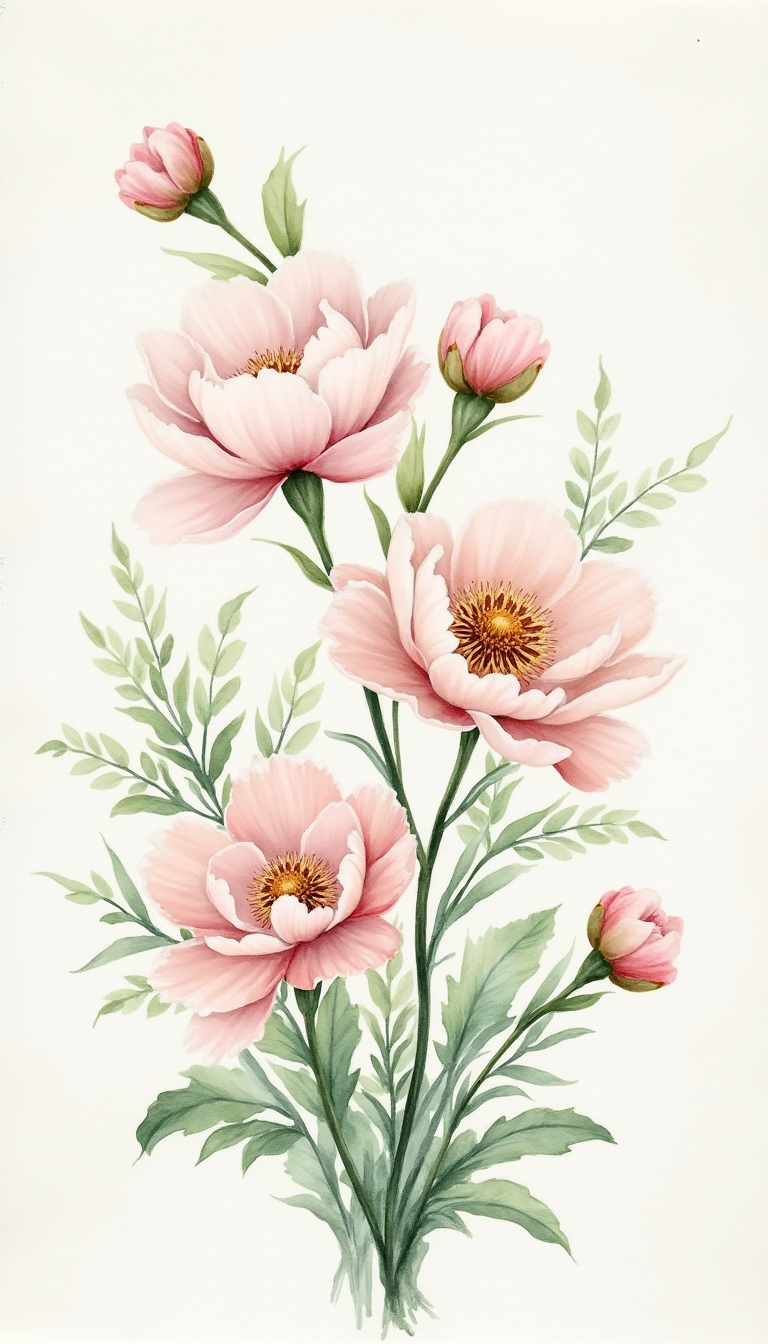
Welcome to The Ultimate Guide to Drawing Flowers with Watercolors. Whether you’re a beginner or an experienced artist, mastering watercolor painting of floral illustrations opens a world of creative possibilities. This comprehensive guide will walk you through the essential watercolor techniques, tips, and tricks to create stunning flower drawings. With vibrant colors and delicate washes, you’ll learn how to bring your floral artwork to life with ease and confidence.
2. Why Choose Watercolor Art for Floral Illustration?
Drawing flowers with watercolors offers a unique blend of transparency, softness, and fluidity that perfectly enhances the delicate nature of blossoms. Watercolor painting lends itself well to capturing the subtle gradients of petals, leaves, and stems. Unlike other mediums, watercolor art allows for spontaneous blending, creating organic and vibrant floral compositions. This makes it the ideal choice for artists seeking to evoke emotion and freshness in their floral illustrations.
3. Essential Supplies for Watercolor Flower Drawing
- High-quality watercolor paints – For vibrant pigmentation and smooth blending.
- Watercolor brushes – A range of sizes for detailed and broad strokes.
- Watercolor paper – Acid-free, cold-pressed paper works best for floral illustrations.
- Masking tape – To secure your paper and create clean borders.
- Gardening-inspired inspiration – To find visual references of flowers.
4. Step-by-Step Guide to Drawing Flowers with Watercolors
Choosing Your Subject
Select a flower that resonates with you, from classic roses to vibrant daisies. Use flower gardening photos for accurate references.
Sketching the Outline
Begin with light pencil sketches to outline your flower. Focus on capturing the overall shape and structure. Don’t press too hard; you want to keep it light for easy watercolor overlay.
Applying Watercolor Techniques
- Wet-on-wet: Wet the paper and apply color for soft, blended petals.
- Wet-on-dry: Paint on dry paper for sharp edges and details.
- Layering: Build up color gradually to add depth and dimension.
These fundamental watercolor techniques will help you achieve realistic and captivating floral illustrations.
5. Tips for Perfecting Your Watercolor Flower Drawing
- Use the right color palette—mix shades that mimic real flower hues.
- Embrace imperfections; watercolor’s unpredictability adds character to your art.
- Practice brush control by experimenting with different brush sizes and pressures.
- Leave white space intentionally for highlights and adding contrast.
- Dry time: Allow layers to dry completely before adding new colors to prevent muddiness.
6. Advanced Watercolor Techniques to Elevate Your Floral Illustration
- Dry brush: Creates texture and fine details in petals and leaves.
- Salt technique: Sprinkling salt on wet paint adds natural texture resembling flower centers or stamen.
- Lifting: Removing paint with a damp brush to create highlights and light reflections.
- Gradients and blending: Transition smoothly between colors for a lifelike appearance.
Exploring these techniques will enable you to create more complex and visually striking botanical artworks.
7. Incorporating Floral Illustration into Your Garden and Home Decor
Beyond paper, your flower drawing skills can inspire real garden planning. Discover balcony gardens or rock gardens using botanical art as inspiration. Additionally, your watercolor floral illustrations make beautiful artwork for framing, greeting cards, or wall decor, bringing beauty into your living spaces.
8. Frequently Asked Questions (FAQs) About Drawing Flowers with Watercolors
What are the best watercolor techniques for beginner floral illustrations?
Starting with wet-on-wet and layering techniques makes it easier for beginners to master watercolor painting of flowers. Practice simple shapes and build confidence gradually.
How do I make my floral illustrations more realistic?
Focus on color accuracy, proper shading, and capturing the natural gradients of petals and leaves. Using references from garden sources helps improve realism.
Can I incorporate other mediums with watercolors in floral art?
Absolutely! Combining colored pencils, ink, or gold leaf can add texture and contrast, creating more dynamic floral artworks.
9. Final Tips for Creating Stunning Flower Drawings with Watercolors
Remember to experiment regularly, keep your supplies organized, and enjoy the process. Artistic growth is achieved through consistent practice and exploration of new watercolor techniques.
10. Conclusion
Mastering drawing flowers with watercolors can be a rewarding journey that enhances your artistic skills and appreciation for nature. With patience and practice, you’ll be able to create vibrant floral illustrations that capture the delicate beauty of flowers. Dive into this colorful world and let your creativity blossom!